Moalboal
Moalboal: Best Time to Visit and What a Trip Costs
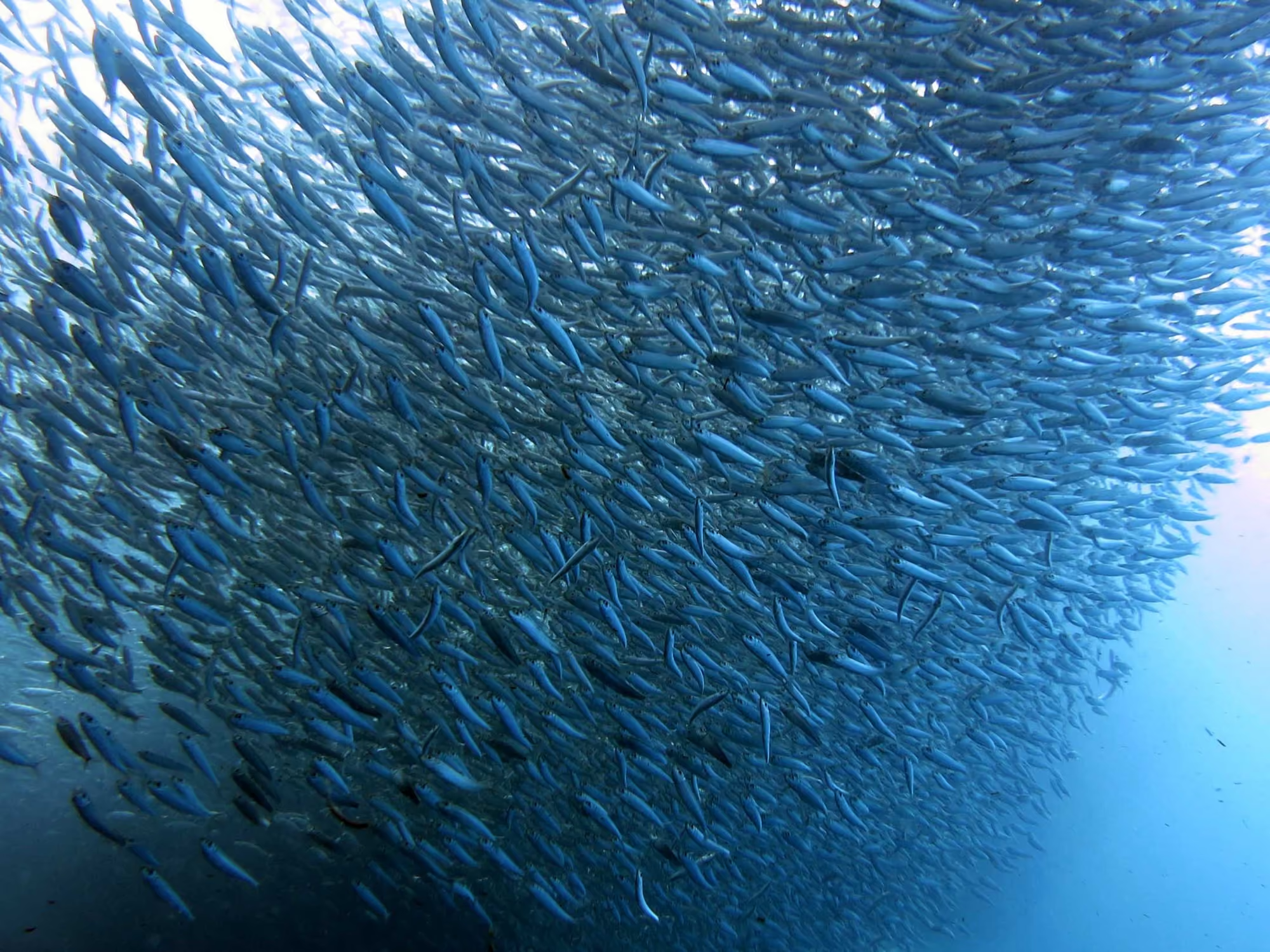
Photo: Lakshmi Sawitri, CC BY 2.0, via Wikimedia Commons.
Two numbers decide a Moalboal trip: which months give calm, clear water, and what the sardine run plus a canyoneering day actually cost once food and a bed are added in.
Best time to visit: the monsoon split
Moalboal sits on Cebu’s southwest coast, which puts it on the sheltered side during the northeast monsoon and more exposed during the southwest monsoon.
Scroll across for the rest of the columns.
| Season | Months | Conditions |
|---|---|---|
| Northeast monsoon (amihan) | November–May | Calmer seas, better visibility, the more reliable window for the sardine run and diving |
| Southwest monsoon (habagat) | June–October | Rougher seas, more rain, visibility drops more often |
Sourced against the same seasonal pattern used on the sardine run and Kawasan Falls canyoneering page, last checked 11 October 2026. This is a general monsoon pattern, not a forecast, a bad week can still land in the calmer half of the year and the reverse.
The sardine school itself is a resident population at Panagsama Beach, present year-round rather than a seasonal migration, so there is no wrong month to see it in principle. What changes with the season is how clear and calm the water is while you are in it.
What a day actually costs
Three things set the floor: a bed, food, and whichever of the two headline activities you do that day.
Scroll across for the rest of the columns.
| Item | Typical cost | Notes |
|---|---|---|
| Guesthouse bed, budget | ≈ ₱700–1,500 / night | Dorm to a simple private room, see where to stay in Moalboal |
| Food, local eateries | ≈ ₱400–700 / day | Three meals at a carinderia or beachfront kitchen, more at a Western-style restaurant |
| Sardine run entrance fee | ₱100 pp | Environmental user fee at the Panagsama Beach booth |
| Kawasan Falls canyoneering | ≈ ₱1,500–1,800 pp | ₱1,500 LGU-regulated rate, up to ₱1,800 with return transport bundled in, full breakdown on the activities page |
Sourced against current accommodation listings and the operator and LGU-rate figures already checked on the activities page, last checked 11 October 2026. Guesthouse rates move with season and demand, so confirm the rate when you book.
Put together, a sardine-run day without canyoneering lands around ₱1,200–2,300 per person including the bed, which is roughly $21–40 at current exchange rates. A canyoneering day pushes that same day to roughly ₱2,700–4,100, about $47–72, since the tour price already bundles transport and lunch on top of the bed and the rest of the day’s food.
Two or three days, not one
The sardine run works best at sunrise and canyoneering is sold as a half-day to full-day trip to Badian, so trying both on one day is tight. Spreading them across two full days, as laid out in the 3-day Cebu and Moalboal itinerary, keeps each activity to its own morning or day rather than rushing between them. A third day leaves room for Pescador Island or an Oslob side trip, both covered on the activities page.
Where this fits in a wider budget
None of the figures above include getting to Moalboal in the first place, see how to get to Moalboal from Cebu for the bus, van and private transfer options and what each one adds to the total.
Before you book
Book accommodation further ahead for the December to April peak, when rooms are more likely to sell out and rates rise, outside that window a day or two of lead time is usually enough. See things to do in Moalboal beyond the sardine run for a freediving course or a day at Lambug Beach. A session with me is the fastest way to ask how a Moalboal budget fits into a wider Cebu trip.
Questions people ask
What is the best time of year to visit Moalboal?
November to May, the northeast monsoon season, tends to bring calmer seas and better underwater visibility for the sardine run and diving. June to October is the southwest monsoon, when the water is rougher and rain is more likely, though the sardine school itself is resident year-round and does not migrate away.
What is the cheapest time to visit Moalboal?
Outside the December to April peak, roughly June to October sees fewer visitors and more room to negotiate on guesthouse rates, though this is also the rainier, rougher-sea season.
How much does a day in Moalboal cost?
A backpacker-style day of a guesthouse bed, local food and the sardine run entrance fee comes to roughly ₱1,200–2,300 (about $21–40). Add a canyoneering day at Kawasan Falls and that single day rises to roughly ₱2,700–4,100 (about $47–72), since the tour itself already includes transport and lunch.
Do prices in Moalboal go up in peak season?
Accommodation does in the December to April peak, when rooms are more likely to sell out and rates rise. The sardine run fee is set by local ordinance and the canyoneering rate is LGU-regulated, though tour operators' all-in packages can still vary.
How many days should I budget for and spend in Moalboal?
Two full days covers both headline activities without rushing: one morning for the sardine run, one full day for Kawasan Falls canyoneering. Add a third day if you also want a proper dive day at Pescador Island or an Oslob whale shark side trip.
One email when there is a new guide
I write when there is a new guide, and only then.